
AI x Hiring
How AI is Embedding Itself Into Every Stage of the Hiring Process—for Both Candidates and Employers

The way we hire and get hired has remained largely unchanged for decades. Resumes, job boards, interviews, and talent evaluation are still manual, subjective, and inefficient—with hiring costs reaching up to $28,000 for competitive roles and time-to-hire becoming increasingly critical.
Yet, hiring is one of the most critical decisions for both individuals and companies—shaping careers, defining team dynamics, and driving business outcomes.
At the same time, AI is being quietly adopted on both sides of the hiring equation:
Candidates are using AI to find companies, write resumes, optimize—and even automate—applications, and prepare for interviews.
Recruiters and hiring managers are leveraging AI to source talent, screen applications, assess candidates more efficiently, and even conduct interviews.
Some say AI tools for job search are a requirement now—without them, you’re playing on hard mode. Job descriptions take forever to sift through, and personalizing resumes or writing hundreds of cover letters is unrealistic. The demand for faster, smarter solutions is real. One Reddit user built an AI agent that “automatically applied for 1,000 jobs and got 50 interviews”—the post went viral, and their GitHub project racked up ~27,000 stars, signaling just how widespread this shift has become.
We are at a stage where AI is gradually expanding its influence across every part of the hiring process—from job discovery to candidate evaluation—slowly becoming an inseparable part of the process and, in some cases, even driving it.
The AI-powered Job Seeker
Job searching has always been a grind—endless resume tweaks, cover letter drafts, and hours spent scrolling through job boards. Now, AI is starting to change that. It can generate custom resumes for each application, automate parts or even entire processes, help candidates prepare for interviews, provide real-time support during them, and assist with salary negotiations. This shift is just beginning, but its impact is growing quickly. It’s not just about efficiency; it’s becoming a competitive edge.
From Manual Effort to Automated Precision: AI-Generated Resumes
Writing resumes used to be a tedious, manual task—tweaking bullet points, adjusting formats, and hoping the right keywords would catch a recruiter’s eye. The challenge wasn’t just writing a resume; it was tailoring it for every job application, ensuring it passed through Applicant Tracking Systems (ATS) designed to filter out all but the most relevant candidates.
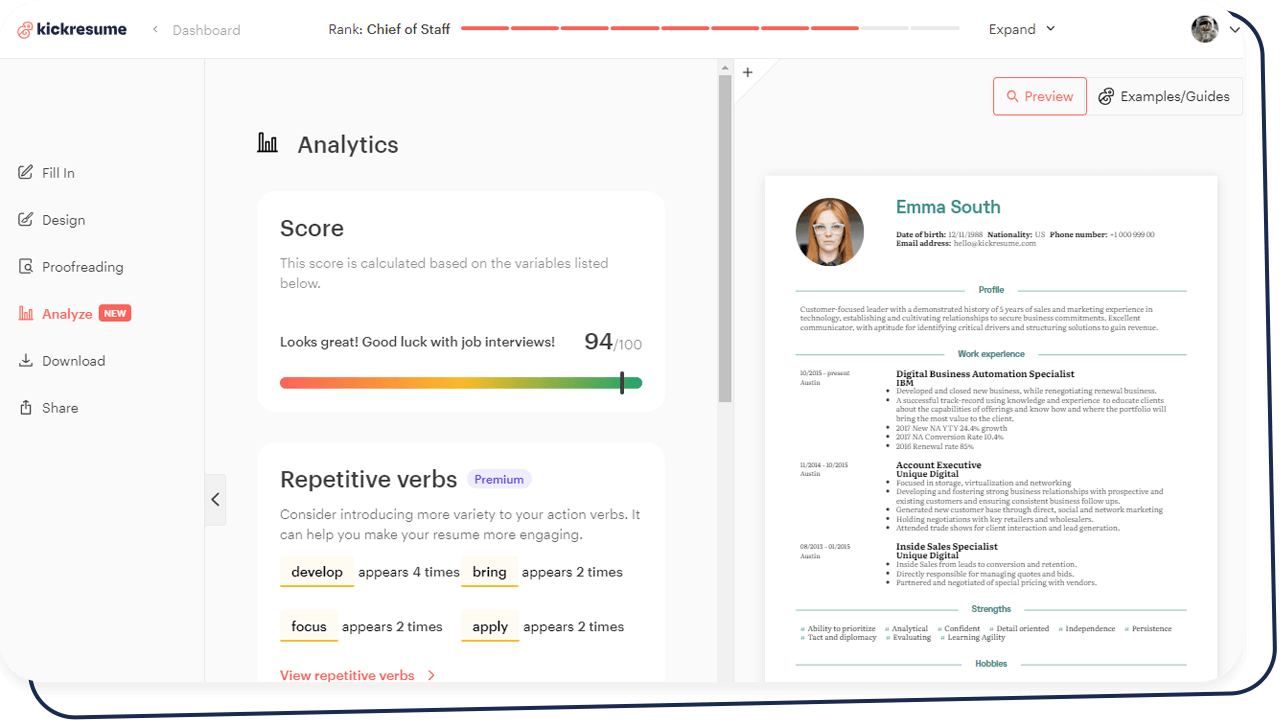
Now, tools like Kickresume, Teal, and JobJotAI analyze job descriptions, identify missing skills, and enhance both resumes and LinkedIn profiles in minutes. Similarly, AI can generate custom cover letters effortlessly, though their relevance is slowly fading as companies rely more on LinkedIn and automated systems.
Leaving Job Boards Behind: The Move from Filters to AI Agents
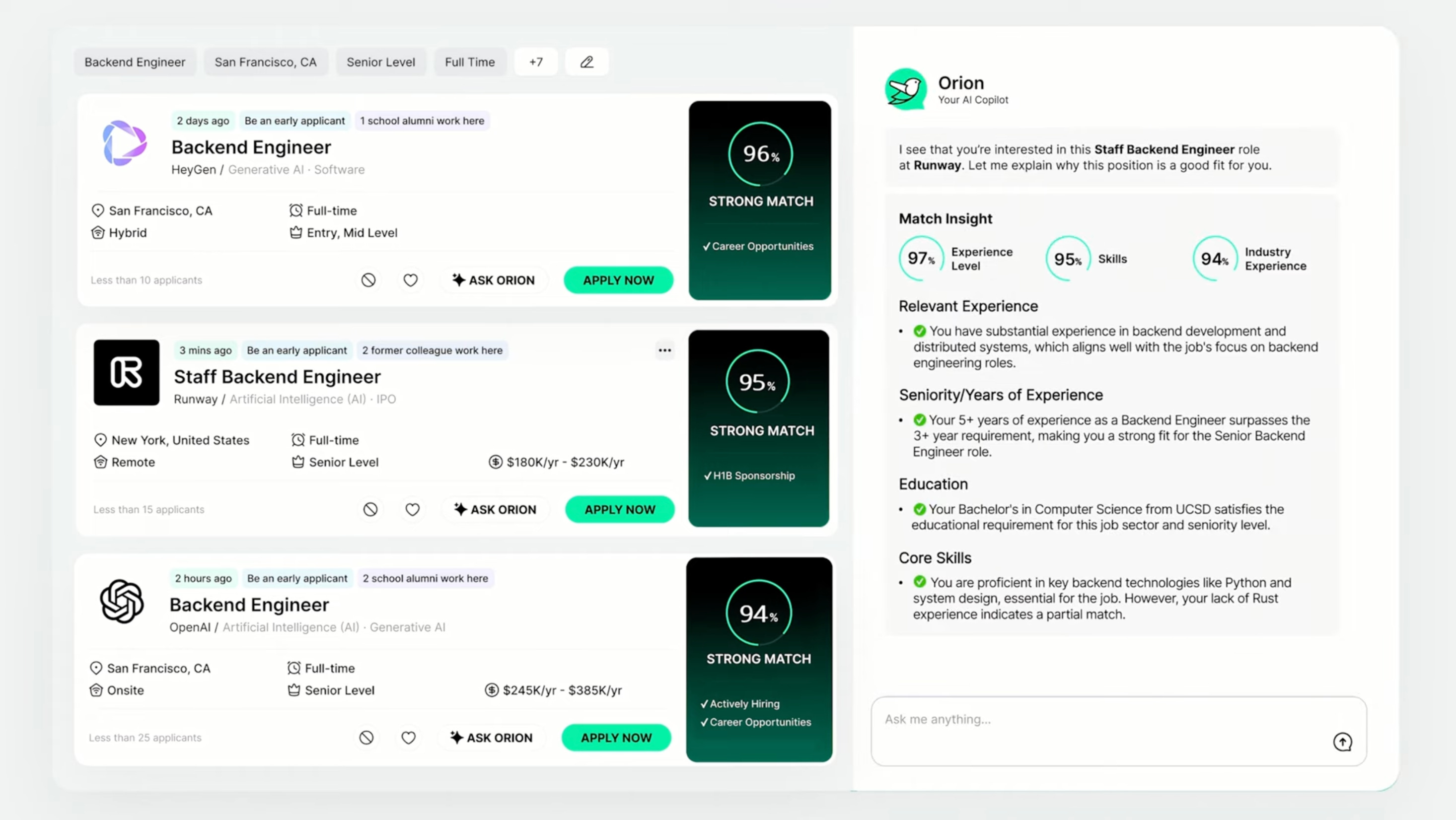
While creating resumes has become easier with AI, they’re slowly losing their central role in the hiring process. The future of job searching is shifting toward AI copilots—personal recruiters and career CRMs like Simplify.jobs, Jobright.ai, and Careerflow.ai. These tools let you create a profile, upload your CV (or skip it entirely), set your job preferences, and let the system handle the rest.
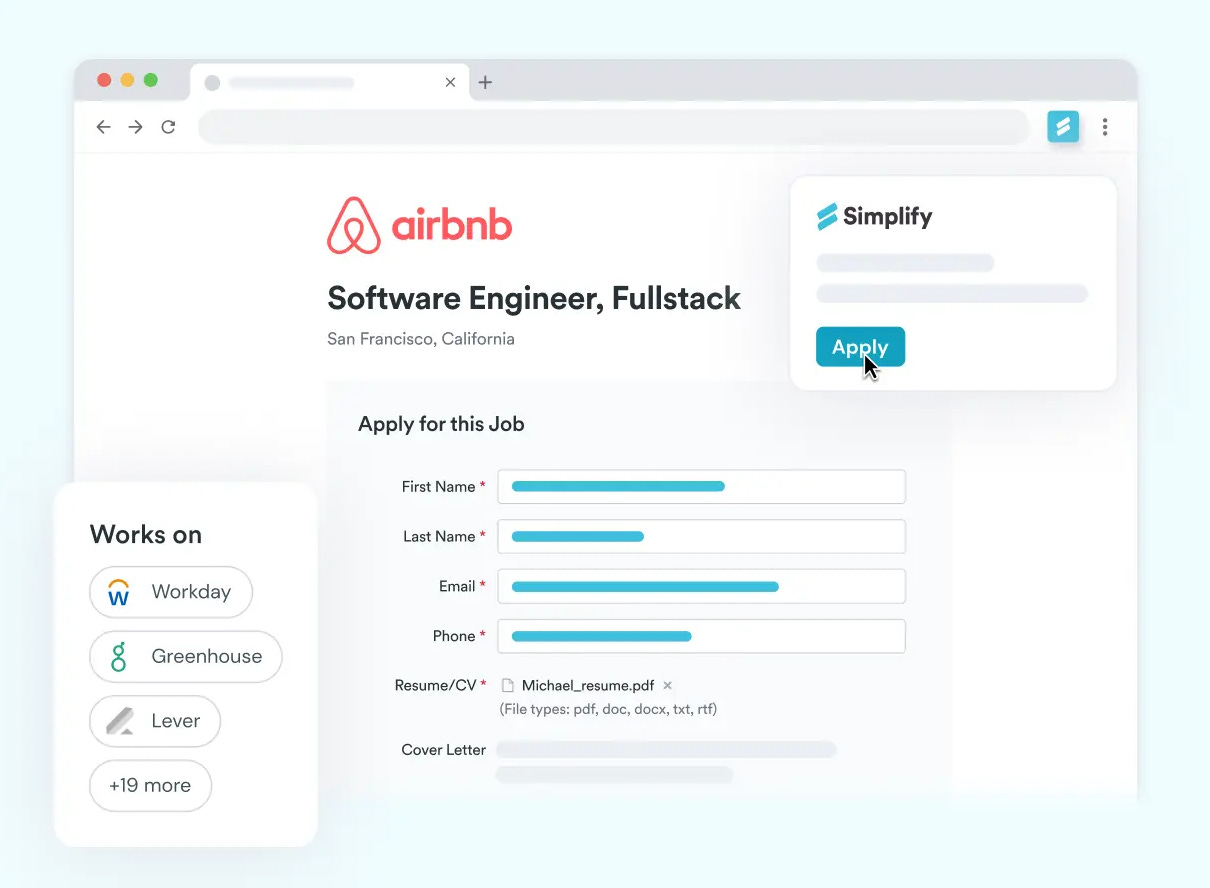
They analyze job descriptions, generate tailored responses to questions like "Why are you a good fit for this role?" and autofill basic details like your name, contact information, and work history.
Traditional job boards are becoming increasingly frustrating for candidates—repetitive listings, irrelevant job suggestions, and poor filtering capabilities make the process feel more like a chore than a search. While some platforms attempt to improve this experience with smarter, even custom filters, the real shift might skip incremental improvements altogether. Instead of evolving into better job boards, we might leap directly into the era of AI agents.
AI agents like AutoJob, Sonara, AI Apply, and Jobo take it even further—mass applying to hundreds of jobs on your behalf every day. It’s not just about efficiency; it’s job searching on autopilot. These platforms continuously scan for new opportunities, optimize applications for each role, and keep applying until you land the job.
AI-Enhanced Interviewing: From Preparation to Real-Time Support
Today, AI not only generates custom interview kits, including personalized cheat sheets summarizing key talking points, resume walkthrough guides to help articulate your experiences effectively, and tailored question sets based on the role you’re targeting.
With AI-powered tools like Yoodli, Huru, and InterviewBuddyAI, you can literally simulate interview scenarios at the position level, receiving personalized feedback on content, tone, and delivery. They don’t just help you practice—they analyze your responses, flag filler words, track speech patterns, and even assess body language cues to improve confidence and clarity. Some, like Yoodli, offer role-playing scenarios beyond traditional interviews, such as negotiating a raise or handling tough workplace conversations.
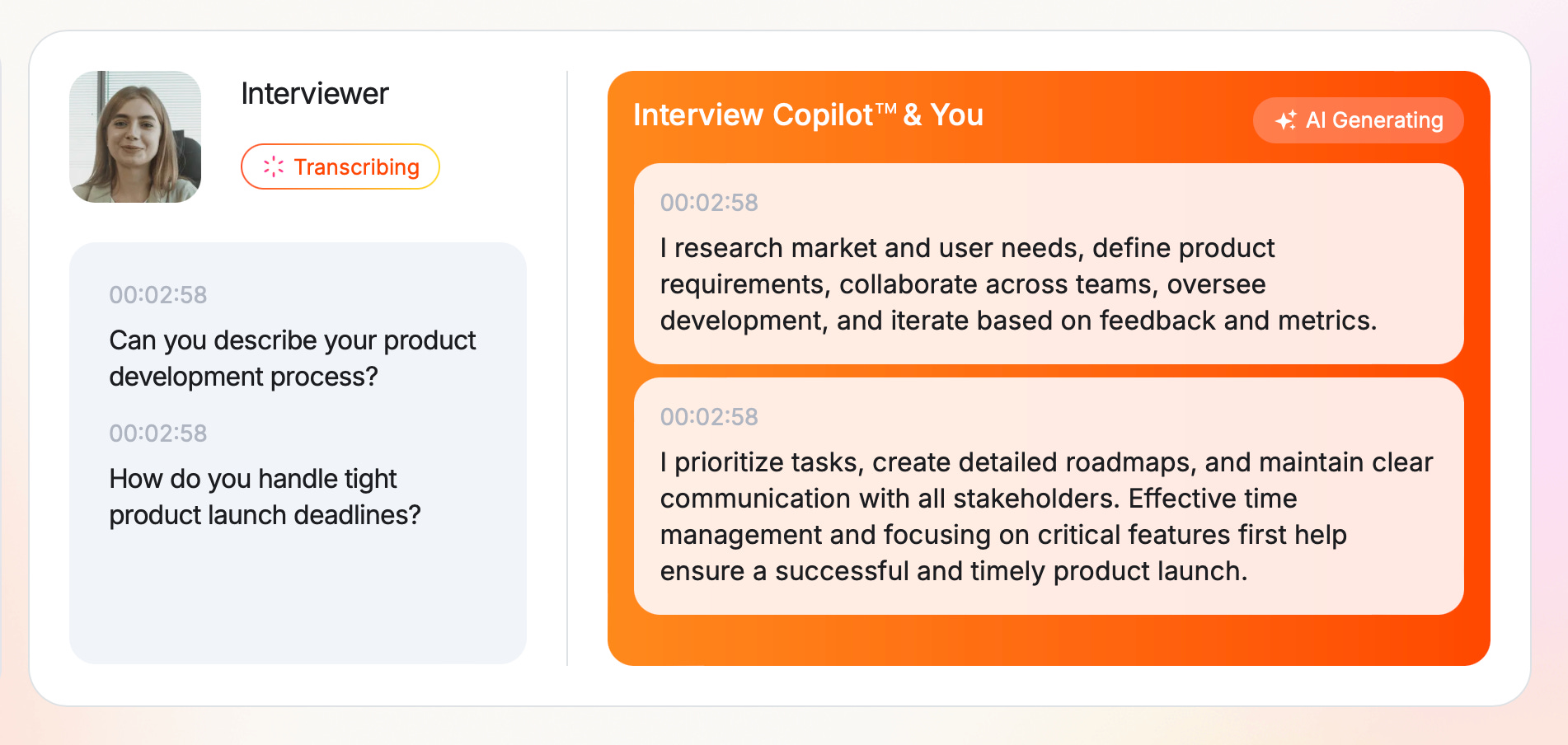
The evolution doesn’t stop at preparation. Real-time AI copilots like FinalRoundAI, AI Apply’s Interview Answer Buddy (you can see it in action here), Sensei, and Verve discreetly assist during live interviews, offering prompts and suggestions to help candidates navigate complex questions. While this raises ethical questions about fairness, it’s already happening—reshaping not just how candidates prepare, but how they perform when it matters most.
The AI-Driven Recruiter
Sourcing Talent: Beyond Traditional Filters
Recruiters spend a significant amount of time processing applicants and proactively searching for talent. While Applicant Tracking Systems (ATS) like Greenhouse function as CRMs with skill-based candidate matching, many are now layering AI features—automated resume screening, candidate matching algorithms, and even AI-driven job description optimization—to reduce manual effort and improve hiring precision. In contrast, AI-native platforms like Spott, designed for executive search firms, aim to transcend efficiency. They leverage AI not just to streamline processes but to foster meaningful connections, adding a layer of personalization that traditional systems lack.
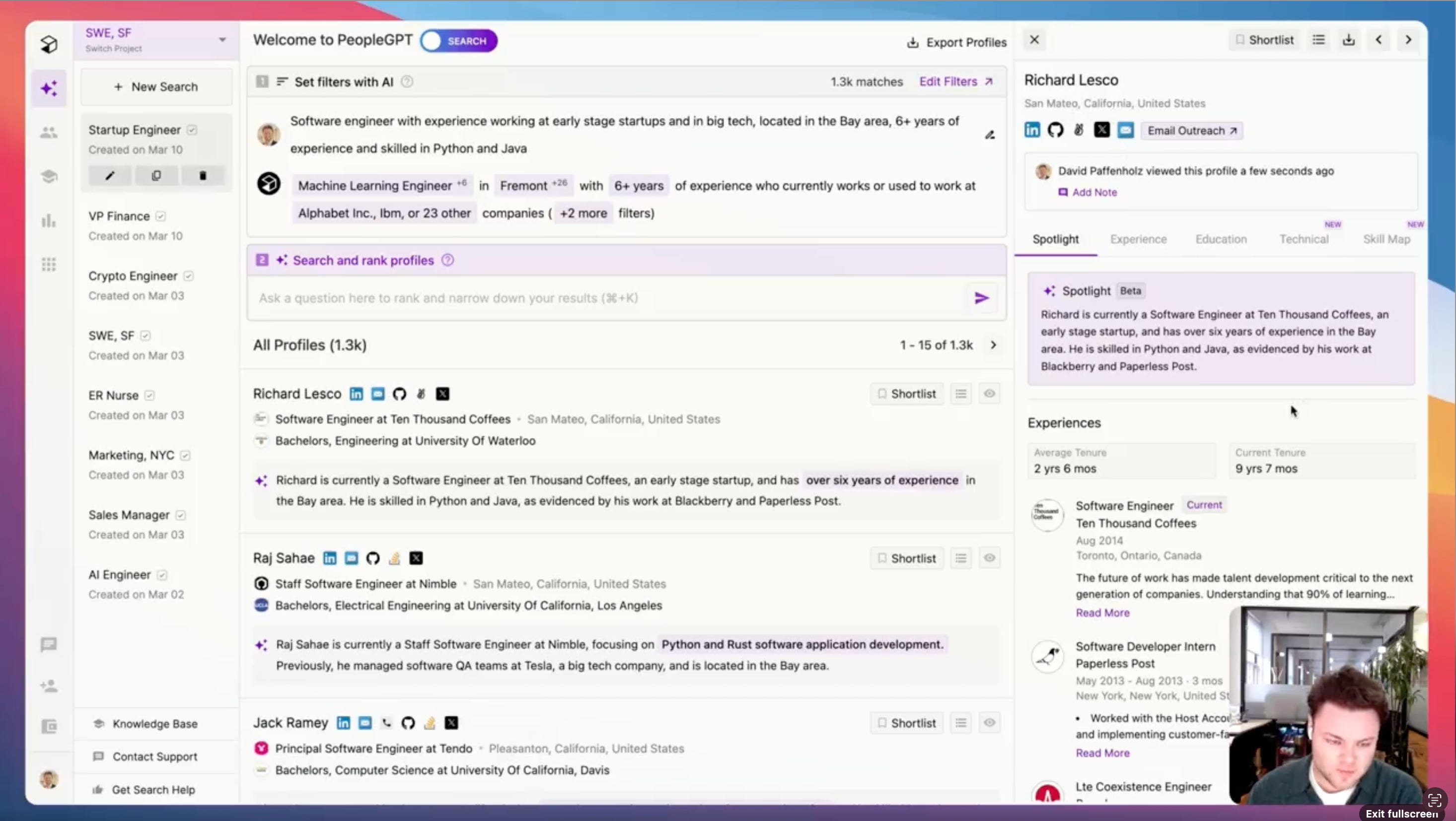
The real bottleneck, however, lies in talent discovery. Traditional platforms like LinkedIn offer basic filters that are often too broad or rigid, making sourcing tedious and inefficient—even as some integrate AI-driven search enhancements, the real breakthroughs are happening elsewhere. AI-first platforms like Juicebox and Serra redefine this process by enabling natural language search queries—think "senior engineers with experience in search infrastructure at top high-growth B2B SaaS companies." These tools don’t just stop at external searches; they integrate seamlessly with ATS platforms, surfacing the most qualified candidates from existing inbound applications using advanced algorithms.
Candidate Screening, Outreach & Engagement
Screening candidates may seem simple one-on-one, but it quickly becomes overwhelming at scale. AI tools like HeroHunt, Eva, and Humanly automate much of this process—reviewing applications, shortlisting candidates, and handling initial engagement, much like how legacy systems are now embedding AI for automated candidate scoring and predictive screening. For companies looking to reduce friction even further, platforms like Mercor extend AI’s role beyond initial screening into live interview vetting, having processed over 300,000 candidates to date. While not without flaws—there have been cases where AI inadvertently filtered out top talent—AI-driven screening is becoming the norm; 42% of companies surveyed by IBM in late 2023 reported using it. The result: less manual work, faster decisions, and more time for meaningful human interactions.
Outreach is evolving, too. Platforms like Vora and WayFaster automate initial phone screenings, offering consistent evaluations without the variability of human bias. This shift is especially compelling in industries that lack strong digital professional networks, like healthcare, where traditional tools like LinkedIn aren’t as effective. Incredible Health highlights this opportunity in nurse hiring, using AI to streamline candidate matching and engagement in a field where digitization has historically lagged.
Interviews & Assessments: AI as the Interviewer
Interviews have long been subjective, time-consuming, and prone to bias. The next wave of recruitment tech is moving toward AI-led interviews. Platforms like Apriora build autonomous AI interviewers that not only conduct interviews efficiently but also analyze responses with precision, capturing nuances that human interviewers might miss. Features like cheat detection add an extra layer of rigor, ensuring assessment integrity.
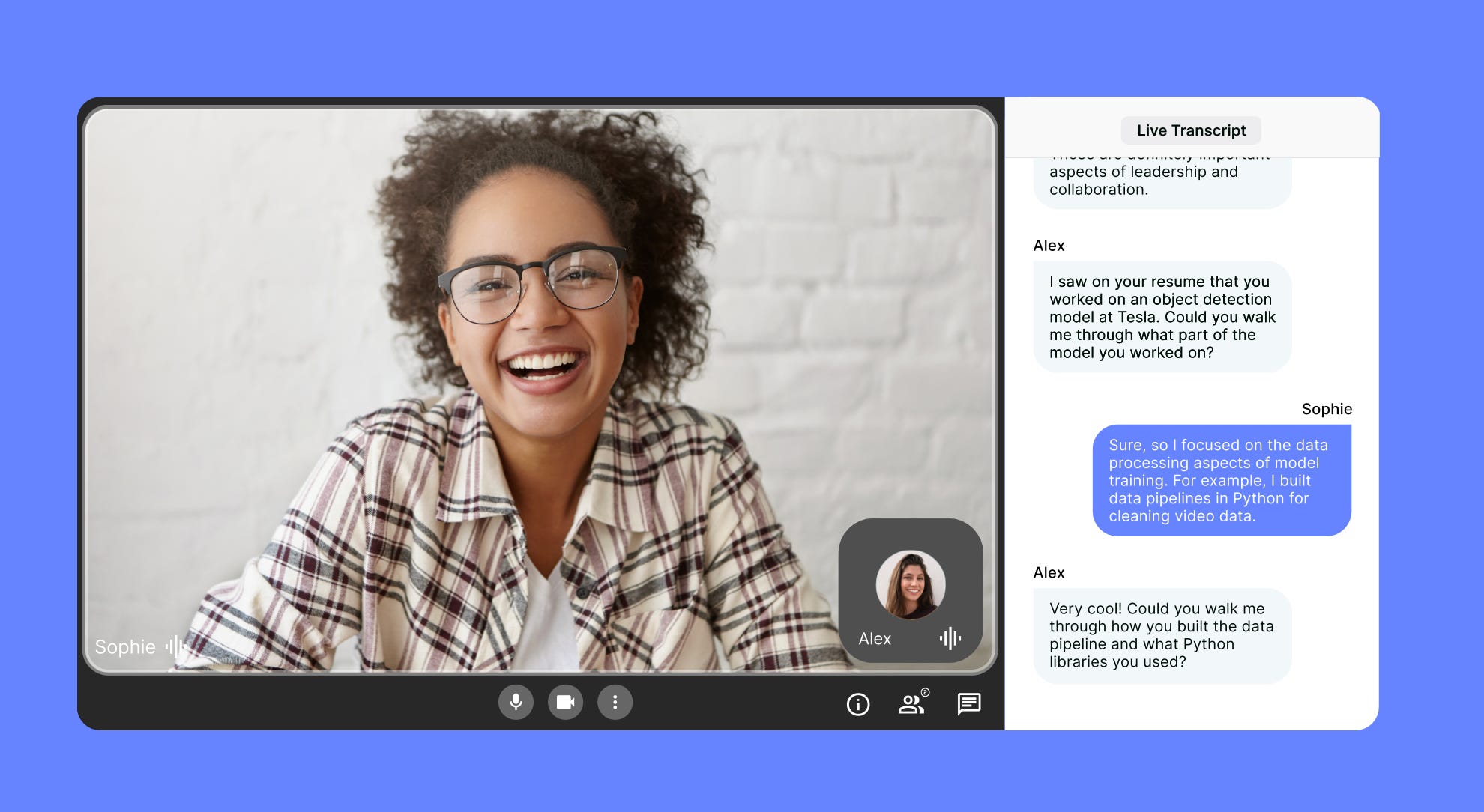
NextByte moves beyond resumes entirely, focusing on skills-based evaluations to measure candidates on what they can do, not just what they claim. LightScreen takes this further for technical roles, simulating real-world problem-solving scenarios that surface genuine competencies rather than rehearsed answers.
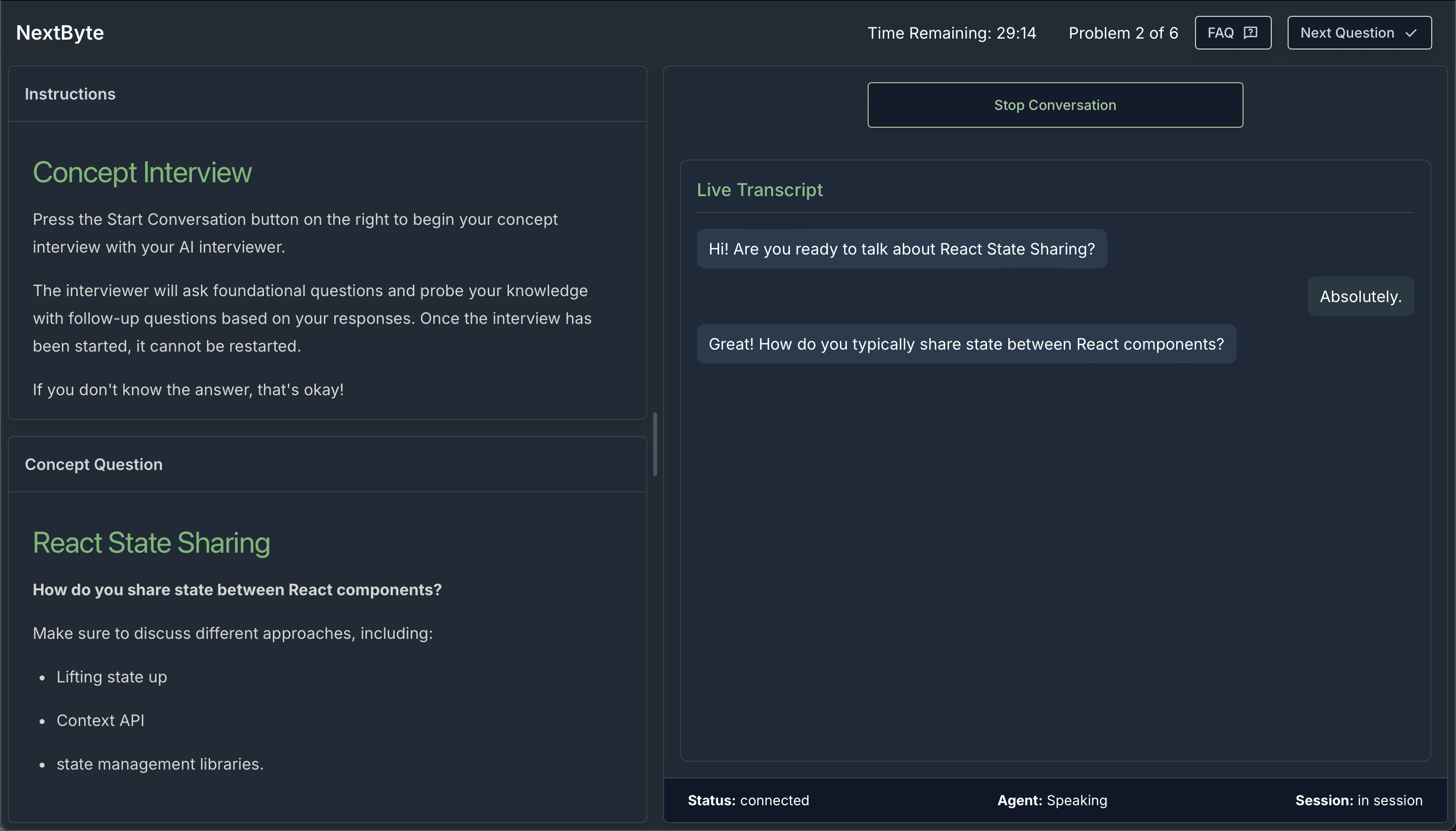
These platforms don’t just automate interviews—they standardize and enhance them. By analyzing both what candidates say and how they say it, AI enables more objective, scalable, and bias-resistant hiring decisions, fundamentally reshaping how talent is assessed.
Rethinking Hiring: Dynamic Profiles and Interactive Resumes
I’m not here to play the prediction game, but from what I’ve observed, it seems we’re heading toward a world beyond static resumes—dynamic, digital profiles enriched by ongoing feedback, project milestones, and professional interactions. These profiles will be updated regularly, customized for specific companies, and even interactive—allowing hiring managers to “converse” with a candidate’s CV or even with the candidate’s avatar. This hyper-personalized approach won’t just enable precise job matching; it will foster trust on both sides and serve as a platform for continuous upskilling.
Bonus Observations
You can get surprisingly far with AI—and a bit of audacity. One person faked their entire resume, sprinkled in trendy tech buzzwords, and leaned on AI to prep for interviews. The result? They tripled their salary, landing a $230K job. After some crash courses and a steep learning curve, they’re thriving in the role—proof that AI can be more than just a tool; it can be a career accelerator.
On the flip side, a recent survey found that many employers would rather hire AI than recent Gen Z graduates. In fact, 37% of them said they’d prefer AI over fresh grads, citing concerns about reliability and job readiness. It’s a headline-grabber, but it reflects a deeper shift: AI isn’t just changing how we work—it’s redefining who gets hired, and soon, how we define careers altogether.
And perhaps more importantly, it signals a broader societal shift—where algorithms increasingly influence not just decisions about jobs, but decisions about people.
If you’re working in this space or know of interesting companies or insights, please reach out on Twitter.